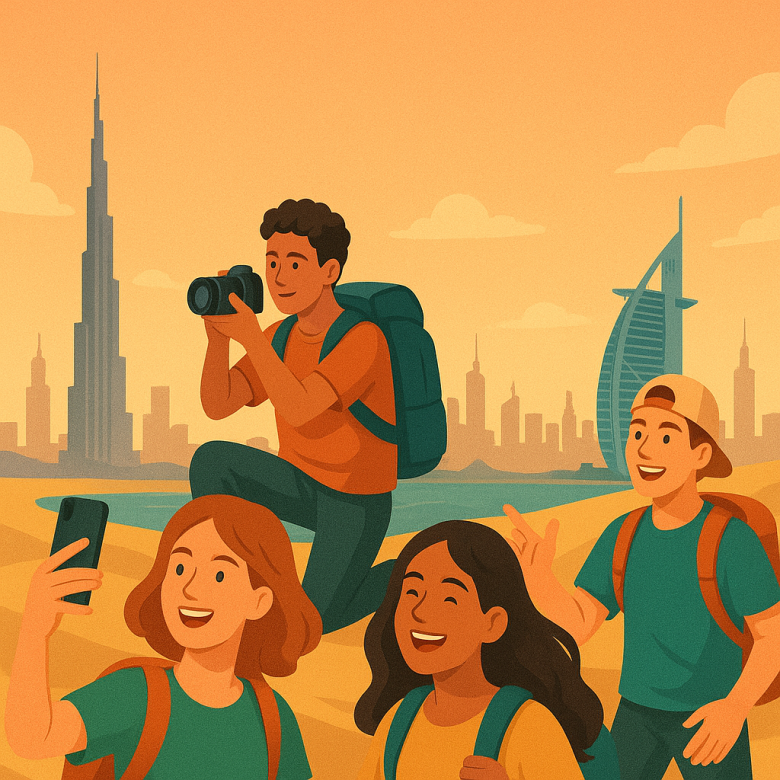

Dubai, the thriving desert city that attracts millions of visitors every year, is a testament to human ambition, innovation, and transformation. From humble beginnings as a small fishing village and pearl diving center, Dubai has evolved into a bustling metropolis. A city that once stood in the midst of endless sand dunes now boasts some of the world’s most iconic structures and is home to luxury, technology, and cultural innovation. This photo journey traces the transformation of Dubai and highlights its dramatic evolution over the decades.
1. A Humble Beginning: The Dubai Creek in the 1950s
In the 1950s, Dubai was a modest settlement, nestled along the Dubai Creek. The Creek was a vital waterway for trade, providing a lifeline for the city’s pearl divers and fishermen. The photo below captures the simplicity of Dubai’s early days. Traditional dhows (wooden boats) could be seen lined up at the docks, their sails catching the wind as they carried goods between the Persian Gulf and nearby countries.
The city was a quiet place, with low-rise mud houses, markets, and sand streets. Little did anyone know that this small town would one day grow into one of the most futuristic cities in the world.
2. The Discovery of Oil: A New Dawn in the 1960s
The turning point for Dubai came in the late 1960s when oil was discovered in the region. This monumental discovery marked the beginning of a new era, providing the financial resources that would fuel the city’s growth and urbanization.
The image below shows an early oil rig in the desert, a symbol of the newfound wealth that would soon reshape the skyline. The proceeds from oil exports allowed the city to invest in infrastructure, technology, and foreign talent.
By the early 1970s, Dubai was undergoing rapid changes. The skyline started to evolve, and the once narrow, sandy streets were replaced with paved roads. Foreign investment flooded the city as Dubai began its journey to becoming the region’s financial hub.
3. The Rise of Modernity: The 1980s and 1990s
By the 1980s, Dubai was no longer just a trading post. With the growth of industries and an influx of expatriates, the city’s skyline began to take shape. The iconic Burj Al Arab, designed to resemble a sail, opened in 1999 and quickly became the epitome of luxury. As the city flourished, skyscrapers began popping up like never before, transforming the landscape into a vertical city.
One of the most famous photos from this era shows the skyline during the 1990s, when construction began on Dubai’s tallest structures. The construction of the Dubai World Trade Center in the 1970s had set the tone for the city’s future — a skyline dotted with imposing glass-and-steel buildings.
The Dubai Marina, which would later be home to luxury residences, shopping malls, and entertainment centers, began its development during this period.
4. The New Millennium: Reaching for the Skies
The 2000s marked the dawn of a new era for Dubai. The city’s ambition reached new heights with projects that were previously unthinkable. The Burj Khalifa, the tallest building in the world at 828 meters, became the symbol of Dubai’s drive to push the boundaries of what’s possible. Its construction, which began in 2004, was a monumental feat of engineering and design.
Photographs from the construction site show the scale of the Burj Khalifa and the incredible transformation that was taking place in the desert. The Burj Khalifa’s completion in 2010 set a new standard for architectural excellence, and it became one of the most photographed buildings in the world.
Around the same time, Palm Jumeirah, a man-made island in the shape of a palm tree, rose from the sea. The project was so ambitious that it required millions of tons of sand and rock to be dredged and reclaimed from the ocean. By the mid-2000s, the palm-shaped island was home to luxury resorts, villas, and some of the most prestigious hotels in the world.
5. Dubai’s World-Class Infrastructure: A Modern Metropolis
By the 2010s, Dubai had truly solidified its place as a global metropolis. The Dubai Metro, one of the world’s most advanced driverless rail systems, was introduced in 2009. The metro allowed the city to handle the growing number of commuters as the population reached new heights.
The city now boasted state-of-the-art shopping malls, such as The Dubai Mall, which became the largest shopping center in the world. Alongside the mall, attractions like the Dubai Aquarium, Dubai Fountain, and Dubai Opera attracted millions of tourists each year. The photos below show the incredible scale of Dubai Mall and its attractions, including the stunning views of the Burj Khalifa.
The city’s constant reinvention is not just limited to architecture. Dubai has also become a hub for art, fashion, and culture. The opening of the Dubai Design District and the hosting of the Dubai Art Dubai fair reflect the city’s blossoming creative scene.
6. Golden Adventure Tourism: Dubai’s Future as a Destination for Thrill-Seekers
As Dubai continues to evolve, it is pushing the boundaries of adventure tourism. The city’s desert, once a barren landscape, has become a playground for thrill-seekers. From dune bashing and camel rides to sandboarding and skydiving, Dubai offers experiences that can’t be found anywhere else.
The Dubai Desert Conservation Reserve is a prime example of how the city is balancing adventure with environmental conservation. Visitors can take a luxury desert safari, including private dune drives, stargazing, and even overnight stays in bedouin-style camps, surrounded by the serene beauty of the desert.
One of the most thrilling experiences is skydiving over Palm Jumeirah. The photo below captures the jaw-dropping view of the Palm Island from thousands of feet in the air, offering a unique perspective of Dubai’s architectural marvel.
With the completion of futuristic developments like the Dubai XLine (the world’s longest urban zipline) and AquaFun Water Park, Dubai’s adventure tourism sector continues to grow. Thrill-seekers from all over the world flock to Dubai to experience a combination of luxury and excitement in the heart of the desert.
Conclusion: Dubai’s Ongoing Evolution
Dubai’s evolution from a small desert town to a global metropolis is nothing short of extraordinary. Its skyline, culture, and innovation have transformed the city into a beacon of modernity, attracting millions of tourists each year. With its continued commitment to growth, sustainability, and adventure, Dubai is poised to remain at the forefront of the world’s most exciting and dynamic cities.
As we look to the future, Dubai’s golden adventure tourism offers a glimpse into the next chapter of its story — one where luxury meets excitement, and the world’s most daring travelers come to experience the unimaginable.